



Updated April 23, 2025
How I Became a Software Engineer in Japan with No Experience
Hi, I’m Alex!
I grew up in the USA and I was a pretty ordinary kid who happened to like Japanese pop culture. I decided to study Japanese in college just for fun, thinking it could be useful someday if I traveled to Japan. Maybe I could even work as a language teacher or translator if I studied hard enough.
What I didn’t know is that I would eventually move to Japan, live here for over ten years, and transition to a career in software engineering.
I had a chat with the Japan Dev team and talked about how this all happened.
In this article: 📝
Learning Japanese and Moving to Japan
So why did I decide to leave the US for Japan?
Honestly, there wasn’t any deep reason behind this move. I didn’t have any family in Japan or any special connection to the country. I just liked Japan’s pop culture as a kid and wanted to visit the country some day.
That led me to start studying Japanese when I became a university student. It began as a hobby but gradually turned into a more serious pursuit when I realized how much I enjoyed learning the language. I then decided to study abroad in Kyoto for a semester, which in turn led to me falling in love with the country and deciding to live there.
“That was life-changing… I went in with super high expectations but the actual experience was even more than that. I loved my time there, and that's what kind of solidified the part of me that wanted to live in Japan.”
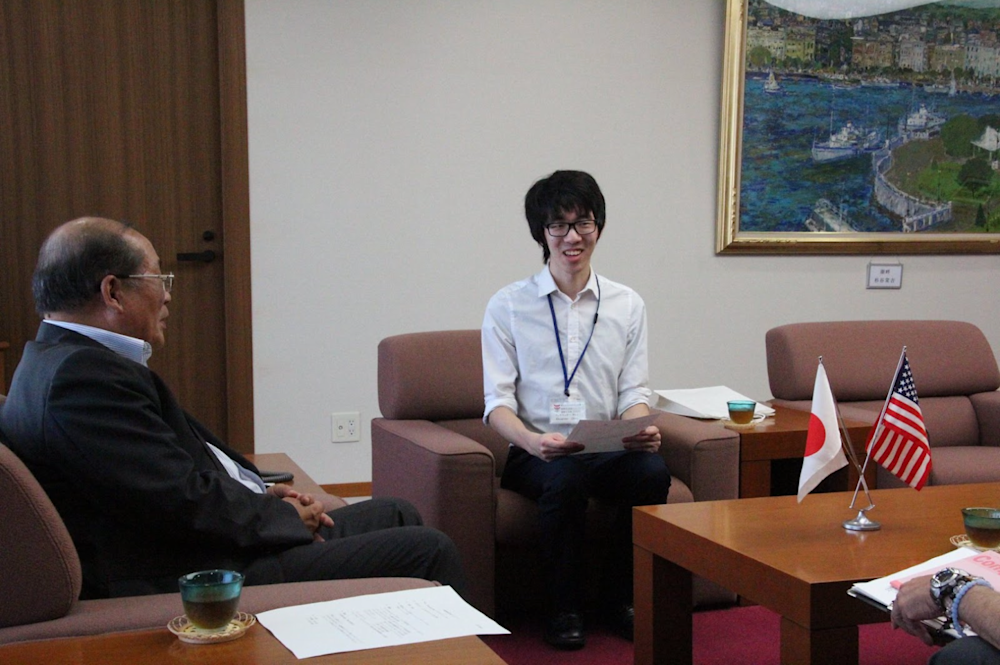
After graduating, I looked for jobs in Japan and found one through the JET Program. I had a choice between two positions: Assistant Language Teacher (ALT) and Coordinator for International Relations (CIR). Despite having a background in education, I ended up choosing the CIR path as it sounded like a more unique opportunity.
I then moved to Shimane Prefecture, where I lived and worked for three years.
The job involved a combination of translation, interpretation, and language teaching duties. I finally got to fulfill my dream of living in Japan and using my language abilities to build a career!
Joining Mercari
My CIR contract had a three-year limit, so I started looking for new jobs in Japan during the final year. I wanted to continue using my linguistic skills, so I applied for several translation jobs.
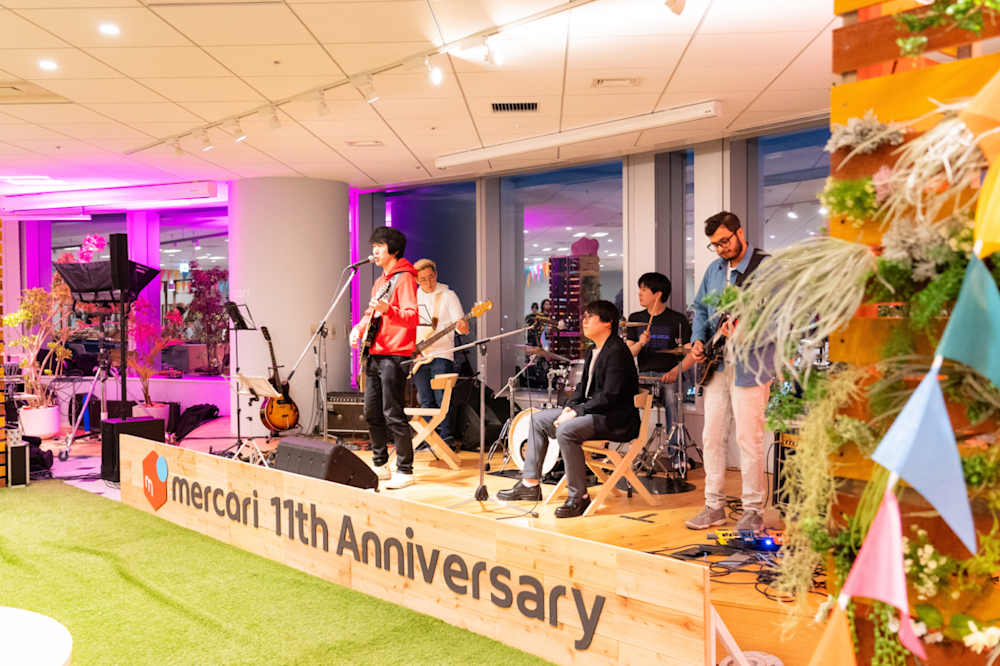
Just by chance, I discovered Mercari during my job search. Mercari was a rapidly-growing tech company that had also established itself as Japan’s very first unicorn startup.
Luckily, this company was hiring new members to support their transition from a startup into a full-blown international company. I took my chances, applied for the job, and got hired! I joined Mercari’s Global Operations Team as a translator and interpreter.
This was the beginning of an exciting new role in a tech company, but it was off to a very bumpy start. The job involved translating technical documents and interpreting for software developers during meetings where they discussed complex engineering topics.
With no previous experience in tech, I was overwhelmed. There was so much technical jargon that I didn’t understand, and it was nearly impossible to provide accurate translations under these conditions.
In order to do my job better, I spent my free time learning about code and software development. I also consulted with my engineer co-workers and asked them to explain concepts that I didn’t understand. Over time, I picked up more technical knowledge, got used to the job, and started developing an interest in software myself.
Working as a translator gave me the chance to see engineers’ day-to-day work. I was fascinated by the development cycle where engineers would discuss project ideas, transform those ideas into reality by writing code, and deploy new software features for millions of users to enjoy.
Seeing this made me realize how powerful software was. I started wondering if I could transition to a technical position where I too could work directly on the development process.
“Coming from a completely non-technical background, it just blew my mind that people could write code in their PC’s, do some magic to release it, and then suddenly people from all around Japan can use this new thing that they built… I wanted to understand how things worked on a deeper level… I wanted to try writing the code myself and pushing something to production and see what that feels like.”
Becoming a Software Engineer
Mercari was very flexible and openly supported employees who were interested in changing their positions within the company. Thanks to this, non-engineers could join the engineering division given that they met certain conditions.
Of course, one of the conditions was to have the necessary engineering skills.
This is where I started my journey. After realizing that I was interested in software development, I decided to learn how to code. My first step was to actually try it and see if I liked it or not.
I started with a free online course called Code in Place, where I spent six weeks learning programming fundamentals and building small projects. Luckily, I enjoyed it and realized that I did indeed like coding, so I decided to take things further.
For the next step in my coding journey, I made a big commitment and signed up for Le Wagon Tokyo, one of Japan’s most established coding bootcamps.
The bootcamp was an incredible experience. After six months of balancing the coursework with my full-time job, I was ready to try switching to engineering in Mercari. I kicked off the process by consulting with my direct manager and also with one of the leaders of the engineering division. They confirmed that transferring would be possible, but would require a series of interviews to ensure that I had the right skills and mindset.
One of those interviews involved an algorithm-based technical assessment, which I had to spend several months preparing for. After successfully passing the challenge, I had a few more interviews with members and managers of an engineering team.
After a somewhat long and grueling process, I finally got the approval to become a backend engineer!
Life as an Engineer
So what was being an engineer actually like? Was it easier or more difficult than expected?
I expected it to be extremely challenging, and the job absolutely met those expectations. Even after all of the studying and preparation, there were so many new things to learn on the job. New languages, frameworks, developer tools, processes, and more.
Before officially becoming an engineer, I had painstakingly studied several languages and frameworks including Python, Javascript, and Ruby on Rails. At Mercari, I ended up using… none of those, because the tech stack was completely different! The job required me to learn new languages like Go and PHP, along with various other technologies like Docker, Kubernetes, and GCP.
The online course, coding bootcamp, and interview process gave me the necessary skills to stand at the starting line. However, no amount of studying could have fully prepared me for the actual day-to-day work. The only reasonable thing to do was dive in head-first and learn everything on the job, with a little help from my friends, teammates and mentors.
Thankfully, my teammates were more than happy to help me in the early stages of my new career. I had daily one-on-one meetings with my wonderful mentor who patiently answered all my questions and helped guide me through difficult tasks. I also regularly met with my team’s tech lead who helped assign tasks that would be appropriate for my experience and help me level up.
It took me a few months to find my flow and get more comfortable with the job, but it was worth the effort. I finally achieved my goal of being a developer working directly on the company’s product. My team and I handled various projects that reached millions of users all over the country.
I also moved to Kyoto and enjoyed all the benefits of remote work. I had a very unique situation where my teammates all worked from completely different locations, including Tokyo, Hokkaido, India, and Brazil! In spite of the geographical differences, everyone proactively communicated and maintained a healthy and fun team culture.
Even while living far from Mercari’s Tokyo headquarters, I made sure to drop by the office every now and then. Sometimes my teammates would gather for in-office days and team dinners. And sometimes the company would hold events and parties for employees to gather and celebrate. I didn’t hesitate to hop on the bullet train and join these events!
Thoughts and Advice
We’re often told about the importance of having connections. Most of us have heard the saying “It’s not what you know, but who you know.”
I do believe that there’s some truth behind this statement. Having professional skills is obviously important in any career, but knowing the right people can open up opportunities that wouldn’t have existed otherwise.
In my case, spending time learning how to code was an essential part of the journey. But I also think that having the right connections in my company was equally as important.
During my time as a translator and interpreter, I worked with countless different teams and gradually built trust with other members. By proving myself in my original role, I was also able to convince others that I would likely excel as an engineer, too.
When I formally requested a transfer to engineering, I wondered if I would face resistance. But because there were leaders in the engineering division who already knew and trusted me, the transfer process ended up being smooth sailing. On top of that, I had several engineer friends giving me encouragement, advice, and coaching during the interview process. I think it’s very unlikely that I would have succeeded without their help.
Breaking into software development without prior experience is tough, and there isn’t a single defined path. But it’s absolutely possible, and my story is just one of many out there. In my case, I did it by first joining a tech company in a non-engineering role, building trust and connections, and eventually leveraging that to transfer to an engineering role.
What am I up to now?
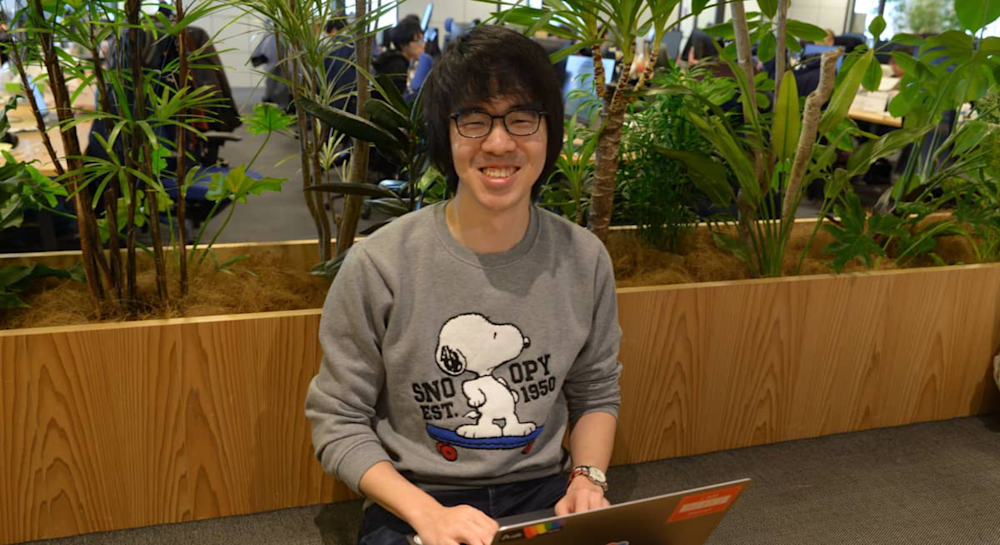
After nearly six years at Mercari, I decided to move on and pursue my own path. I now work as a freelance coding teacher, technical translator, and writer.
I like to describe my current lifestyle as a culmination of all of the knowledge and experiences I gained over the course of my career. Much of this is possible thanks to my time at Mercari and the things I learned during the transition from a non-technical role to engineering.
“Having all my experience in tech under my belt is really helpful. Now, because of that, I can teach programming. And because of that, I can write articles about tech. And I can also translate technical documents that were a bit of a headache to do before… All of my time spent as an engineer has been a really great asset for me.”
I’m just an ordinary person, and I don’t have any special skills or qualities that other people lack. But I was able to take my life and career in a new direction, and I believe that anyone out there can do the same if they really want to.
If you want to do something big like change your career or move to a new country, just go for it! Start now and don’t second-guess yourself.
And if you’re interested in building a tech career in Japan, check out Japan Dev’s job board!
P.S. Want to listen to the audio version of this interview? Check it out on Spotify below

Alexander Chen
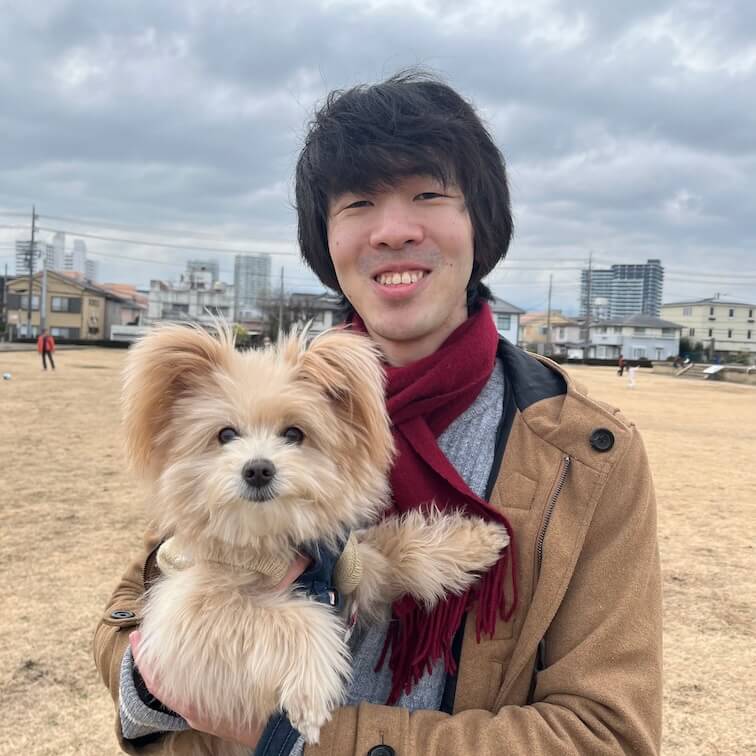
Alex is a Kyoto-based writer who previously worked as a software engineer and translator for a Japanese tech company. He spends his free time gaming, playing the ukulele, and going on walks with his dog Mugi.
- Senior Backend Engineer (Go), Communication Platform Department, ...
- Money Forward
- Tokyo
- ¥7M ~ ¥11M
- Logistics Robot Hardware Engineer (Mass Production Design)
- Telexistence
- Tokyo
- ¥6M ~ ¥8M
- 【exaBase Studio】Senior Platform Engineer
- ExaWizards
- Tokyo
- ¥8M ~ ¥13M
- Mobile Engineer (Sales AI Agent)
- ExaWizards
- Tokyo
- ¥6.48M ~ ¥10.08M
- Product Designer (Gen AI x HR Tech Solutions)
- ExaWizards
- Tokyo
- ¥5M ~ ¥9.6M



Latest Tech Jobs 🇯🇵
Explore the top developer jobs in Japan for foreigners
- Senior Backend Engineer (Go), Communication Platform Department, ...
- Money Forward
- Tokyo
- ¥7M ~ ¥11M
- Logistics Robot Hardware Engineer (Mass Production Design)
- Telexistence
- Tokyo
- ¥6M ~ ¥8M
- Mobile Engineer (Sales AI Agent)
- ExaWizards
- Tokyo
- ¥6.48M ~ ¥10.08M
- Product Designer (Gen AI x HR Tech Solutions)
- ExaWizards
- Tokyo
- ¥5M ~ ¥9.6M
- 【exaBase Studio】Senior Platform Engineer
- ExaWizards
- Tokyo
- ¥8M ~ ¥13M
- Senior Fullstack Engineer (Generative AI Product team)
- ExaWizards
- Tokyo
- ¥8M ~ ¥13M
- Software Engineer (Product)
- Remody
- Tokyo
- ¥10M ~ ¥15M
- Senior Fullstack Engineer (Tokyo)
- Mico
- Tokyo
- ¥7M ~ ¥9M
- QA Manager (Osaka)
- Mico
- Osaka
- ¥8M ~ ¥12M
- QA Manager (Tokyo)
- Mico
- Tokyo
- ¥8M ~ ¥12M


Get Job Alerts
Sign up for our newsletter to get hand-picked tech jobs in Japan – straight to your inbox.

© 2026 Japan Dev. All rights reserved.
Proudly built in Tokyo.


Curated with 💙 in Tokyo by Eric Turner
All our data is gathered from publicly available sources or contributed by users